
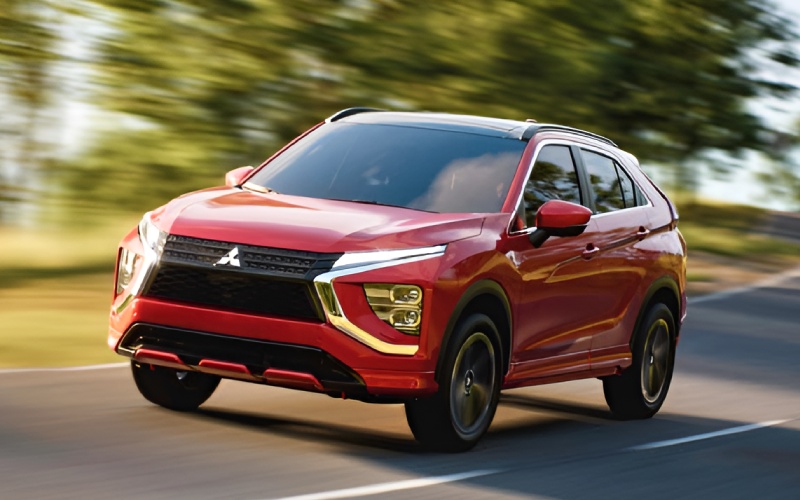
Grand Blanc Mitsubishi - Does S-AWC on the 2026 Mitsubishi Eclipse Cross outperform Symmetrical All-Wheel Drive on the 2026 Subaru Crosstrek around Ann Arbor, MI?
As many Michigan drivers weigh the 2026 Mitsubishi Eclipse Cross against the 2026 Subaru Crosstrek, one question rises to the top: which all-wheel-drive system inspires more confidence when roads turn slick or unpredictable? Mitsubishi’s Super-All Wheel Control (S-AWC) and Subaru’s Symmetrical All-Wheel Drive both deliver four-corner traction, but they go about it differently. S-AWC stands out because it integrates torque split management with stability control logic to proactively help the vehicle track as intended. That integration shows up in the moments that matter—icy intersections, rutted slush, wet leaves during shoulder seasons—where subtle torque and brake inputs help settle the chassis before you need to make a correction. Subaru’s approach is proven, and with available X-MODE, it gains additional traction tools, but the Eclipse Cross tuning provides a more cohesive, driver-reassuring feel on mixed-friction surfaces.
To break down the differences in a practical way, think about the scenarios you face most often: merging in fast-changing lane conditions, creeping over frozen parking-lot puddles, and transitioning from dry pavement to a shaded, icy side street. S-AWC, standard across every Eclipse Cross trim, constantly harmonizes wheel torque and yaw to preserve your line with minimal fuss. Paired with a turbocharged 1.5-liter engine that delivers early torque, the Eclipse Cross feels composed and confident while you go about your day. The Crosstrek, with its SUBARU BOXER® engine and Symmetrical All-Wheel Drive, is steady and predictable, and X-MODE adds selectable traction modes. For many drivers, though, the Eclipse Cross’s integrated control and refined ride quality turn winter driving into a calmer experience, especially in the shoulder seasons when conditions change from block to block.
- Integration depth: S-AWC manages torque split and stability in concert, enhancing tracking on low-friction transitions.
- Every-trim coverage: S-AWC is standard on all Eclipse Cross trims; Symmetrical All-Wheel Drive is standard on Crosstrek, with X-MODE availability varying by trim.
- Low-end traction feel: The Eclipse Cross turbo’s early torque pairs well with S-AWC for measured launches on slick surfaces.
- Parking-lot confidence: Eclipse Cross offers an available Multi-View Camera System, helpful when snowbanks narrow your view.
- Ownership backing: Eclipse Cross coverage includes a 10-year/100,000-mile Powertrain Limited Warranty and 2-Year/30,000-Mile Limited Maintenance.
Beyond traction, daily ease matters. The Eclipse Cross offers available features like a Handsfree Power Tailgate, Power Folding Side Mirrors, and a panoramic glass roof on SE Pano—small conveniences that make winter errands and weekend getaways more enjoyable. Wireless Apple CarPlay and Android Auto are available, and Mitsubishi Connect with Safeguard And Remote Services adds helpful remote functions after enrollment. The Crosstrek counters with a spacious interior, available Subaru 11.6-inch Multimedia with navigation on select trims, and the assurance of EyeSight® Driver Assist Technology. Both are strong contenders; the deciding factor for many shoppers is how planted the Eclipse Cross feels the instant the pavement turns uncertain. That sensation of calm control—less steering correction, fewer abrupt traction surprises—is what frequently wins the conversation during back-to-back test drives.
If you are researching with family needs in mind, factor in visibility and confidence aids. The Eclipse Cross' available 360-degree Multi-View Camera System simplifies tight maneuvers when snow narrows lanes or conceals curbs, while standard LED lighting helps cut through long, early-evening commutes. Subaru’s active safety suite and available DriverFocus Distraction Mitigation System are noteworthy, but for winter traction specifically, the Eclipse Cross S-AWC system is the differentiator that drivers feel in the wheel and seat. The bottom line: both vehicles will get you there; the Eclipse Cross tends to get you there feeling steadier and more relaxed.
We encourage you to schedule a test drive loop that includes real-world challenges like uneven plow lines and shaded turns. One drive is often all it takes to understand how S-AWC manages transitions before you even register the change in grip. When you are ready to compare these two compact SUVs back-to-back, our team is here to help with a structured route and clear, straightforward answers that align with your daily routine.
Frequently Asked Questions:
Does S-AWC make a noticeable difference at neighborhood speeds?
Yes. S-AWC’s integration with stability control helps the Eclipse Cross track true at low speeds where icy patches, ruts, or slush ridges can unsettle a vehicle, reducing the need for mid-corner corrections.
How does S-AWC compare to X-MODE in deep snow?
X-MODE is effective, and both systems improve traction. S-AWC’s constant integration of torque split and yaw control provides an especially composed feel when surfaces change rapidly, like from plowed to unplowed sections.
Can I get S-AWC without moving up to a higher trim?
Yes. Every Eclipse Cross trim includes S-AWC, so you do not have to upgrade to access the system’s benefits.
Grand Blanc Mitsubishi offers knowledgeable guidance and carefully planned test routes to help you feel the differences for yourself, serving Lansing, Ann Arbor, and Saginaw with a focus on clarity and confidence.
Request more 2026 Mitsubishi Eclipse Cross information
Categories:
Mitsubishi Eclipse Cross